
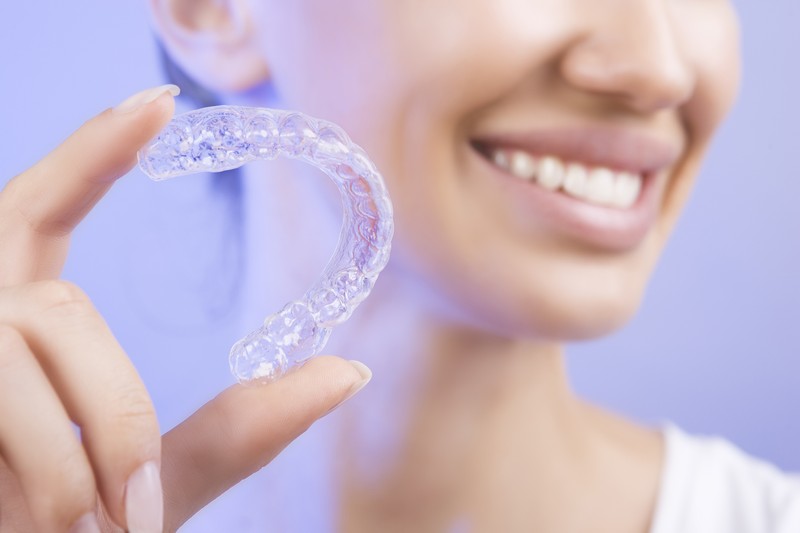
Invisalign Clear Aligners in Manhattan, NY
Invisalign is a modern orthodontic option that uses a sequence of removable clear aligners to move eligible teeth gradually. At Manhattan Best Dental Care, we provide Invisalign evaluations for teens and adults on the Upper East Side and throughout Manhattan. Digital planning allows our team to assess your bite, discuss realistic goals, and determine whether clear aligners or another approach may be appropriate.
How Invisalign Treatment Works
Invisalign treatment uses a customized series of smooth plastic aligners. Each set is designed to apply controlled pressure to selected teeth according to the digital treatment plan. Patients change aligners on the schedule provided by the dentist and attend progress visits so tooth movement and fit can be monitored.
The aligners are removable for eating, drinking anything other than water, brushing, and flossing. To keep treatment progressing as planned, patients generally need to wear them for approximately 20 to 22 hours per day or as specifically directed by the treating dentist.
Dental Concerns Invisalign May Address
Invisalign may be considered for eligible patients with crowded teeth, gaps, certain overbites, underbites, crossbites, or teeth that have shifted after previous orthodontic treatment. The type and severity of tooth movement, jaw relationship, gum health, and patient cooperation all affect candidacy.
Clear aligners are not the best option for every orthodontic concern. Some complex movements may require attachments, additional techniques, referral to an orthodontist, or treatment with traditional braces. An examination is necessary before recommending a plan.
Your Invisalign Consultation and Digital Scan
Your consultation includes a review of your dental concerns, oral-health examination, and bite evaluation. Digital X-rays or other records may be recommended. Our iTero scanner can capture a three-dimensional digital impression without traditional impression material and assist with clear-aligner planning.
Before treatment begins, active cavities, gum inflammation, or other oral-health problems may need to be addressed. The dentist will review the proposed plan, anticipated timeline, aligner wear, attachments if needed, fees, limitations, and retention after treatment.
Living With Invisalign Aligners
Remove aligners before meals and most drinks, then brush your teeth before putting them back in whenever possible. Clean aligners using the method recommended by the dental team and avoid hot water, which may distort the plastic. Keep aligners in their case when they are not in your mouth.
Some pressure or tenderness is common when starting a new set because the aligners are applying force to the teeth. Contact the office if an aligner no longer fits, an attachment comes off, you lose a tray, or discomfort is significant or persistent.
Retainers and Maintaining Your Results
Teeth can shift after orthodontic treatment. Retainers are typically prescribed after the active aligner sequence to help maintain the new positions. Wear and replacement recommendations vary, so follow the schedule provided by your dentist.
Continue routine cleanings and dental exams during and after Invisalign treatment. If you are considering additional cosmetic changes, such as teeth whitening, bonding, or veneers, those services can be coordinated with the timing of your orthodontic plan.
Invisalign Frequently Asked Questions
How many hours a day should I wear Invisalign aligners?
Patients are generally instructed to wear aligners for approximately 20 to 22 hours per day, removing them for meals, most drinks, brushing, and flossing.
How long does Invisalign treatment take?
Treatment time varies according to the amount and complexity of tooth movement, aligner wear, biological response, and whether refinements are needed.
Can I eat while wearing Invisalign aligners?
Aligners should be removed before eating and before drinking anything other than water, unless your treating dentist provides different instructions.
Is Invisalign suitable for every orthodontic problem?
No. Invisalign can treat many common alignment and bite concerns, but some complex cases may require another technique or referral to an orthodontist.
Will Invisalign affect my speech?
Some patients notice a temporary change or slight lisp when they begin wearing aligners. Speech usually adapts as the tongue becomes accustomed to them.
Will I need a retainer after Invisalign?
Yes. Retainers are typically needed after active treatment to help maintain tooth positions and reduce unwanted shifting.